
Distribution Center Construction in Charlotte NC
Build a Distribution Facility Around the Way Your Operation Moves
Distribution centers are built around movement. Trucks arrive and depart, products move from receiving through storage and material-handling systems, employees work across multiple operational areas, and outbound shipments must stay on schedule.
Broad Reach Construction provides distribution center construction in Charlotte NC, helping owners and developers coordinate the building, site, infrastructure, and construction process around the operational requirements of the facility.
- Plan truck circulation, loading docks, and receiving areas
- Coordinate racking and material-handling requirements
- Address electrical, HVAC, fire protection, and utility needs
- Manage procurement, construction sequencing, and site logistics
- Plan facilities for current operations and future growth
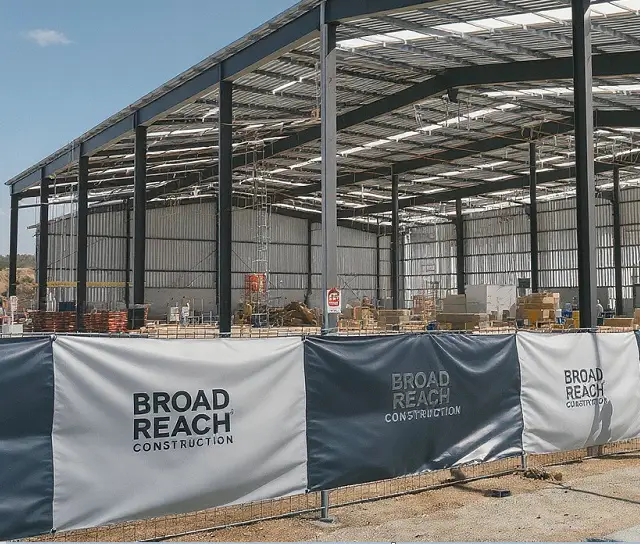
Distribution Center Construction for Charlotte Owners and Developers
A distribution facility must do more than provide square footage. The building and site need to support the movement of products, trucks, employees, and equipment efficiently throughout the day.
Broad Reach works with owners, developers, design professionals, subcontractors, and suppliers to coordinate distribution center construction from planning through project turnover.
Early decisions involving building configuration, dock locations, truck circulation, clear heights, slabs, utilities, fire protection, mechanical and electrical systems, and material-handling requirements can influence both construction and long-term facility performance.
Our construction management approach focuses on identifying those requirements early and keeping the project team coordinated as the facility moves from planning into construction.
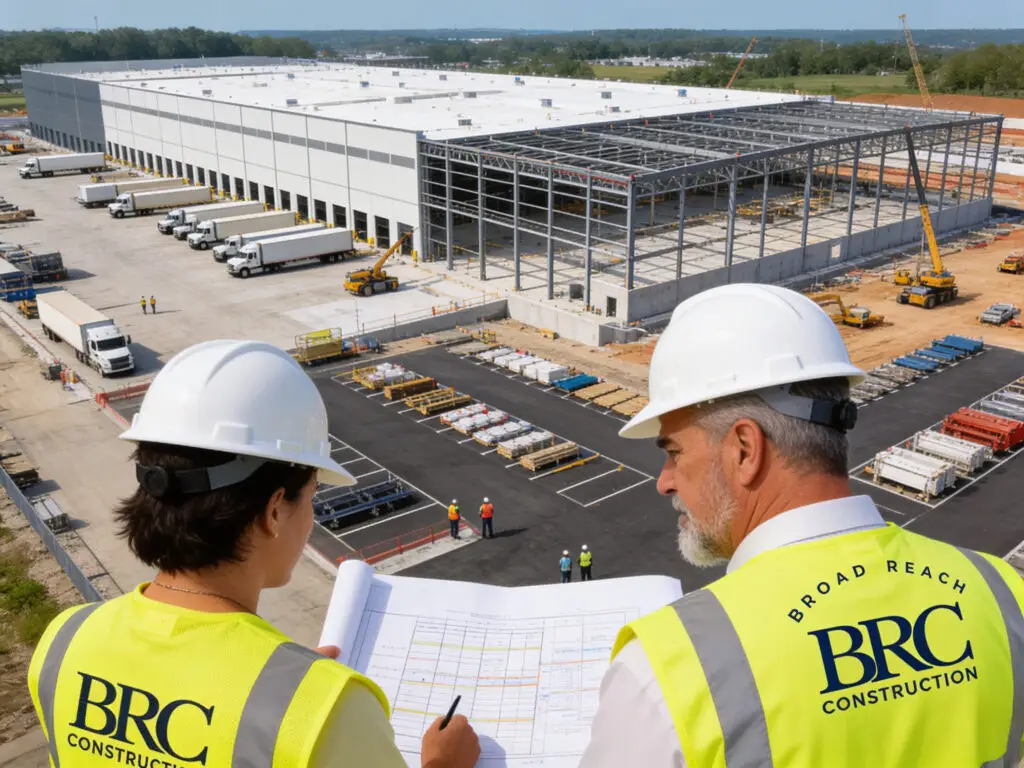
Planning the Facility Around Distribution Operations
The way products move through a distribution center should influence how the facility is planned.
Operations may include:
Inbound Deliveries → Receiving → Storage → Picking and Material Handling → Staging → Outbound Shipping
The exact process varies by operation, but construction decisions should support that workflow rather than interfere with it.
Dock locations, aisle configurations, employee areas, equipment clearances, storage requirements, lighting, electrical distribution, fire protection, and material-handling systems may all be affected by the operational plan.
Understanding these requirements during planning allows the construction team to coordinate building systems and construction activities around the way the completed facility is expected to function.
Truck Circulation, Loading Docks and Site Logistics
A distribution center’s operation extends well beyond the walls of the building.
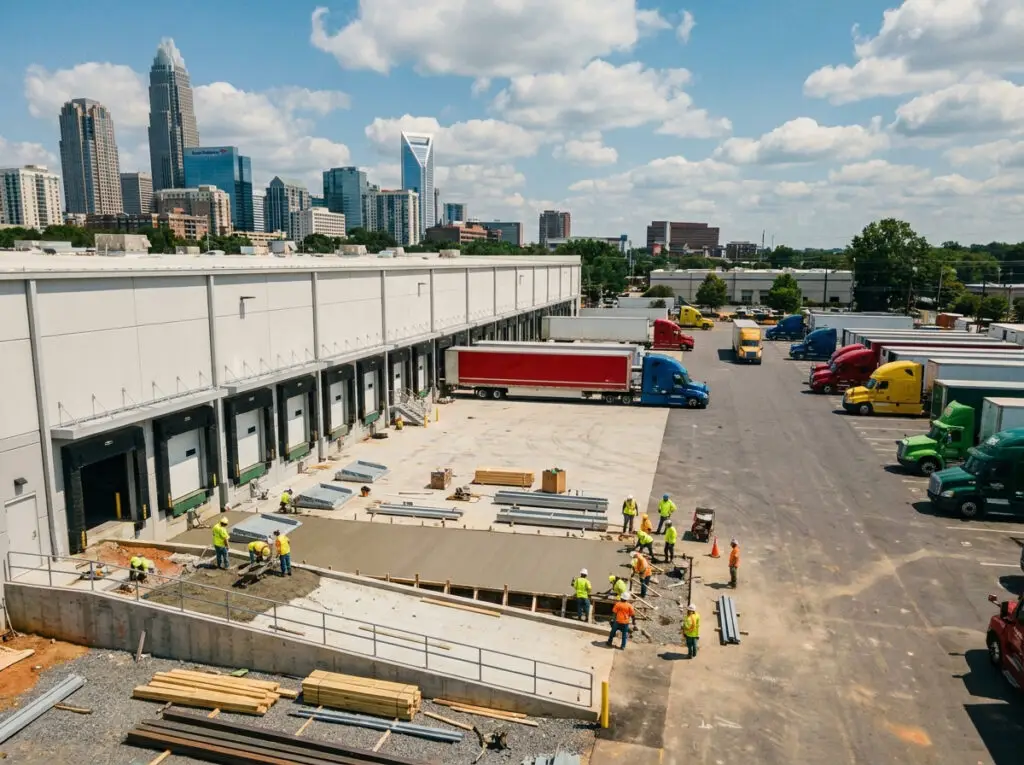
Truck entrances, internal circulation, trailer maneuvering, loading docks, staging areas, employee parking, emergency access, and delivery routes all compete for space on the site.
Loading dock construction may also require coordination of dock equipment, overhead doors, electrical requirements, structural conditions, pavement, drainage, and building systems.
Construction itself adds another layer of traffic and activity.
Material deliveries, subcontractors, cranes, construction equipment, and staging areas need to be coordinated without creating unnecessary conflicts across the site.
Broad Reach incorporates these considerations into project planning and construction logistics so access and movement remain organized throughout construction.
Racking and Material-Handling Coordination
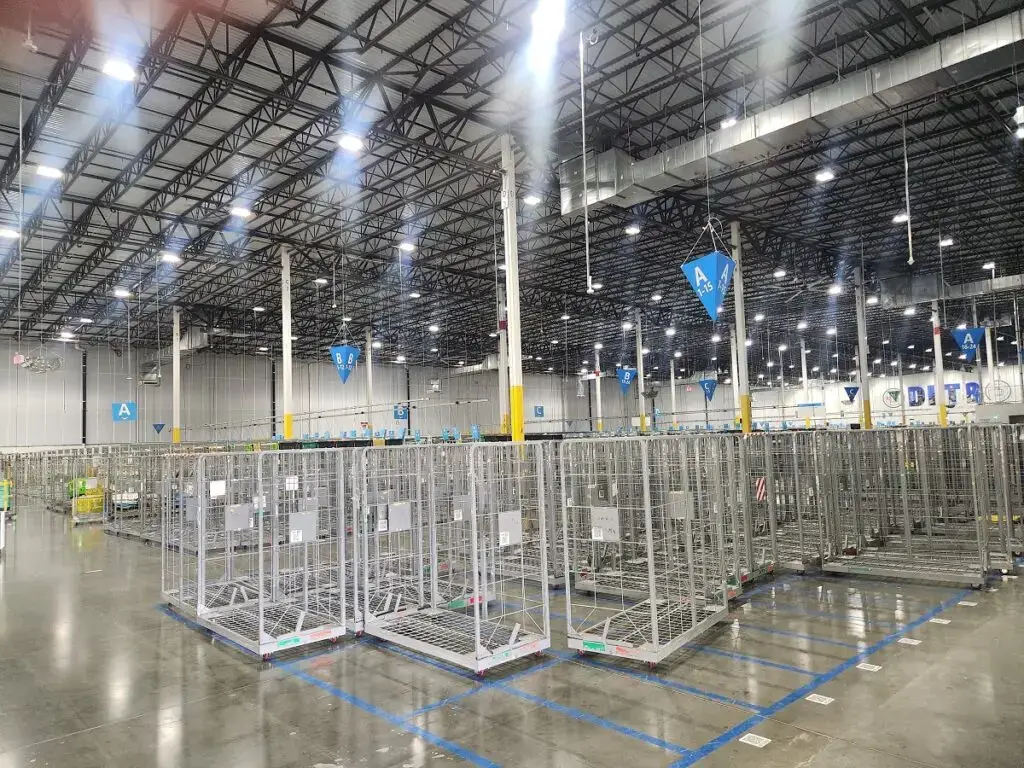
Racking and material-handling systems can influence construction requirements throughout a distribution facility.
Racking layouts may affect slab requirements, lighting locations, sprinkler coverage, clearances, aisle widths, and equipment circulation. Conveyors and other material-handling systems may require electrical service, structural support, equipment clearances, controls, or coordination with other building systems.
These requirements should be identified early enough to coordinate them with the building rather than treating them as an afterthought.
Broad Reach works with the project team to coordinate construction requirements with planned storage and material-handling systems, reducing the likelihood of conflicts during installation and facility startup.
Electrical, HVAC, Fire Protection and Building Systems
Distribution centers can place substantial demands on building infrastructure.
Electrical requirements may include lighting, dock equipment, material-handling systems, charging areas, controls, communications, security systems, and other operational equipment.
HVAC and ventilation requirements can vary across warehouse areas, offices, employee spaces, equipment areas, and other portions of the facility.
Fire-protection requirements must also be coordinated with the building layout, storage configuration, racking, clear heights, and intended use of the facility.
Utilities and major building systems should therefore be evaluated as part of the overall project rather than independently.
Coordinating these systems early helps the construction team identify capacity requirements, installation conflicts, procurement needs, and potential schedule risks before they become field problems.
Noise Control for Distribution and Industrial Facilities
Distribution centers can generate significant operational noise from conveyors, material-handling equipment, machinery, loading operations, mechanical systems, and other equipment operating throughout the facility.
Where noise needs to be better contained or separated from employees and adjacent work areas, industrial noise-control systems can become an important facility improvement.
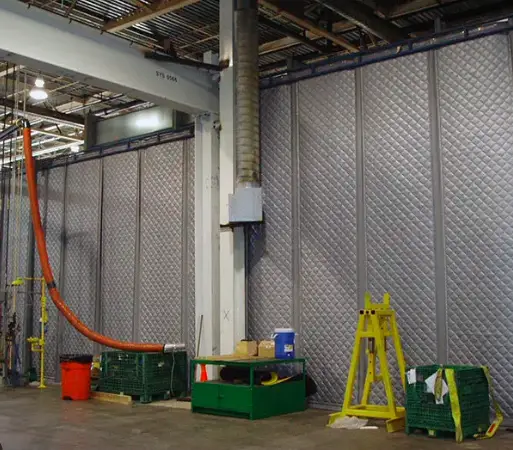
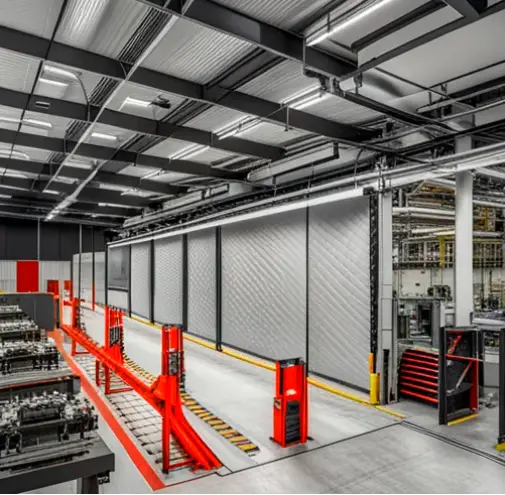
Broad Reach Construction has experience installing industrial noise curtains in operating distribution facilities as part of facility improvement projects. Flexible acoustic barriers can help reduce the transmission of equipment and operational noise without necessarily requiring permanent walls or major changes to the building layout.
Noise curtains may be appropriate for isolating noisy equipment, separating material-handling or operational areas, creating quieter work zones, or providing additional acoustic separation between different activities within a large facility.
Installation requires careful planning. Existing structure, equipment clearances, employee and forklift circulation, access points, overhead building systems, fire and life-safety requirements, and ongoing facility operations may all affect how an acoustic barrier can be installed.
For active distribution facilities, Broad Reach can coordinate noise-control improvements around existing operations while helping owners minimize unnecessary interference with shipping, receiving, and daily workflow.
Pre-Construction Planning for Distribution Facilities
Many of the decisions that affect distribution center construction should be addressed before work begins.
Preconstruction provides an opportunity to evaluate the project scope, budget, constructability, building systems, site conditions, procurement requirements, permitting, schedule, and construction logistics.
It is also an important time to identify owner-furnished equipment, material-handling requirements, long-lead components, and operational considerations that need to be incorporated into the construction plan.
Broad Reach’s pre-construction planning services in Charlotte, NC help owners identify these requirements early and establish a more informed path toward construction.
Scheduling and Logistics for Distribution Center Construction
Distribution center projects involve interconnected activities that must occur in the correct sequence.
Sitework, foundations and slabs, structural construction, the building envelope, MEP systems, fire protection, loading docks, interior improvements, material-handling coordination, inspections, and turnover must all align with the overall project schedule.
Long-lead materials and equipment can also influence critical project milestones.
Broad Reach’s approach to warehouse construction scheduling and logistics coordinates procurement, subcontractors, material deliveries, site access, sequencing, inspections, and other critical activities from mobilization through turnover.
The objective is not simply to establish a completion date. It is to actively manage the activities that determine whether that date remains achievable.
Planning Distribution Centers for Expansion and Future Growth
Distribution requirements can change as companies add customers, products, equipment, employees, or geographic markets.
Owners planning a new facility should therefore consider not only what the operation requires today but what the site and building may need to accommodate in the future.
Depending on the project, planning may consider:
- Additional loading docks
- Expanded storage capacity
- Future racking configurations
- Increased electrical demand
- Additional material-handling equipment
- Building additions
- Yard and trailer capacity
- Employee and office space
- Utility and fire-protection capacity
Not every future requirement needs to be constructed on day one. However, considering likely expansion during initial planning can help ownership make more informed decisions about the building and site.
Quality Control, Inspections and Facility Turnover
A distribution center must be ready to perform when ownership takes possession.
Quality control should occur throughout construction rather than being limited to a final punch list.
Broad Reach coordinates ongoing field review, subcontractor work, identified deficiencies, corrective work, inspections, and project closeout as construction progresses.
As completion approaches, attention shifts toward final inspections, building systems, outstanding corrective items, documentation, and turnover requirements.
The objective is an orderly transition from construction to an operational facility—not a rushed handoff followed by unresolved construction issues.
Distribution Center Construction Management in Charlotte
Distribution center projects require coordination across the site, building, systems, subcontractors, suppliers, inspectors, and operational requirements.
Broad Reach provides construction management throughout that process, maintaining visibility into scheduling, procurement, quality, safety, logistics, cost considerations, and project progress.
For owners and developers planning new industrial facilities, our warehouse construction services in Charlotte, NC provide experienced construction management from early planning through completion.
Broad Reach also provides warehouse construction services throughout North Carolina, supporting owners and developers with construction planning and project execution across the state.
Frequently Asked Questions
How is distribution center construction different from standard warehouse construction?
Distribution centers are typically planned around the movement and throughput of products. Truck circulation, receiving, loading docks, storage, racking, material-handling equipment, staging, and outbound shipping can all influence building and site requirements.
When should planning begin for a new distribution center?
Planning should begin as early as possible. Early preconstruction allows the project team to evaluate site conditions, building requirements, utilities, material-handling needs, procurement, budgeting, scheduling, permitting, and potential construction risks before work begins.
How do loading docks affect distribution center planning?
Loading docks influence truck circulation, building configuration, structural requirements, dock equipment, electrical systems, pavement, drainage, and daily shipping and receiving operations. They should be coordinated as part of the overall facility plan.
When should racking and material-handling systems be coordinated?
Ideally, these requirements should be identified during planning and coordinated before construction reaches the affected systems. Racking and material-handling equipment can influence slabs, lighting, fire protection, electrical requirements, clearances, and operational layouts.
Why are noise curtains used in distribution centers?
Industrial noise curtains can help reduce the transmission of noise from machinery, conveyors, material-handling systems, and other operational equipment. They can provide flexible acoustic separation without necessarily constructing permanent walls.
Can noise curtains be installed in an operating distribution facility?
Depending on the facility and installation requirements, noise-control improvements can often be coordinated around ongoing operations. Installation planning should consider equipment, structural attachment, employee and forklift circulation, building systems, access, safety requirements, and operational schedules.
Can Broad Reach manage distribution center renovations and improvements?
Yes. In addition to new construction, Broad Reach manages warehouse and distribution facility improvements. Projects may require phased construction and logistics planning to help reduce unnecessary disruption to ongoing operations.
Planning a Distribution Center in Charlotte?
A successful distribution facility begins with understanding how the operation needs to function and coordinating the building, site, systems, and construction process around those requirements.
Broad Reach Construction helps Charlotte owners and developers manage distribution center projects from early planning through construction and turnover.