The Future of Commercial EV Charging Stations: A Resource Guide for Developers, Property Owners & Fleet Managers
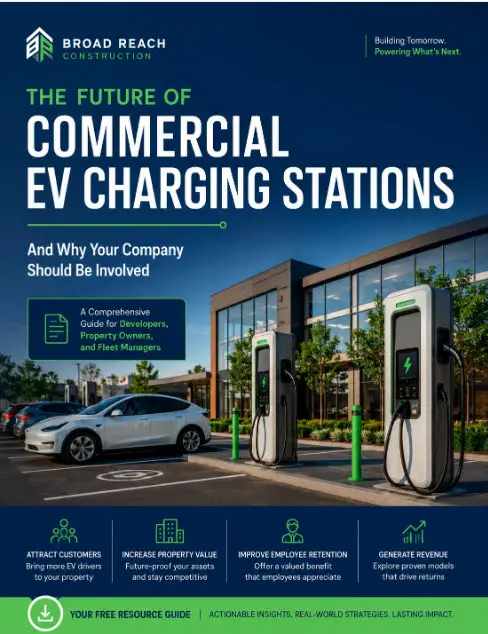
Electric vehicle adoption is reshaping commercial real estate, fleet operations, and customer expectations. This free guide explains how EV charging infrastructure can help businesses attract customers, retain employees, increase property value, and prepare for the future.
- How EV Chargers Turn Passing Cars into Paying Customers
- Why Your Next Must-Have Employee Perk
Isn’t in the break room - Future-Proof Your Brand: What Installing Chargers Says About Your Business
- The Three Ways to Pay for It (and Even Prot)
- What It Takes to Get Started: A Simple 3-Step Path
- Your Parking Lot’s Future: The First Simple Step You Can Take Today

Electric vehicle adoption is transforming commercial real estate, customer behavior, fleet operations, and workplace expectations. Businesses that prepare today will be positioned to attract new customers, retain valuable employees, increase property value, and remain competitive as EV adoption continues to grow.
Broad Reach Construction created this free educational guide to help developers, property owners, fleet managers, and commercial decision-makers understand the opportunities surrounding commercial EV charging infrastructure.
Download the Free Guide
The Future of Commercial EV Charging Stations And Why Your Company Should Be Involved
Why Commercial EV Charging Matters Now
The shift toward electric vehicles is no longer a future trend. Businesses across the country are evaluating how EV infrastructure can support customer acquisition, tenant retention, employee satisfaction, and long-term property value.
Major vehicle manufacturers continue expanding their electric vehicle offerings, while businesses, municipalities, and property owners are adapting to changing transportation demands. As more EVs enter the market, access to convenient charging locations is becoming a critical factor in where people shop, work, travel, and live.
For commercial property owners, EV charging stations represent more than a parking lot upgrade. They are an investment in future-ready infrastructure that can help properties remain competitive for years to come.
What You'll Learn Inside This Guide
This guide explores the practical and financial considerations surrounding commercial EV charging stations, including:
Understanding Commercial EV Charging Systems
Learn how commercial charging stations work and how they differ from residential charging equipment.
Level 2 vs. DC Fast Charging
Understand which charging solution best fits your property, customer base, or operational requirements.
Attracting Customers Through Charging Infrastructure
Discover how EV charging stations can help bring new visitors to your property and encourage longer customer visits.
Workplace Charging Benefits
Explore how EV charging can become a valuable employee recruitment and retention tool.
Commercial Property Value Considerations
Learn why many developers view EV infrastructure as an important long-term investment.
Revenue Opportunities
Review the various business models available, including free charging, cost recovery, and revenue-generating installations.
Installation Planning
Understand the process involved in evaluating, designing, and installing commercial charging stations.
Future-Proofing Commercial Assets
Learn how EV infrastructure can help properties adapt to evolving transportation trends and tenant expectations.
Posted on Google
 Jim Pevarnik26 days ago
Trustindex verifies that the original source of the review is Google.
Our company, Pevarnik Bros., Inc., has done numerous projects with Broad Reach Construction since 2024. I can unequivocally say that Broad Reach, and Kevin Morgan in particular, is the most ethical and fair General Contractor that I've worked with in my 20 years of being a subcontractor. Not only that, but they also look at the big picture and don't sacrifice quality for schedule and/or money. I make these statements with a lot of knowledge of the construction industry, and we've worked with some of their competitors as well, and Broad Reach is tops. They've earned it through hard conversations on tight project timelines. Kevin doesn't waste energy looking for someone to blame when things don't go as planned, he laser focuses on solutions. It's amazing how well projects go when you have a General Contractor that is solution focused and doesn't look down on his subcontractors.Posted on Google Michael Morgan175 days agoI had the opportunity to work with Broad Reach On a EV charging Project in Charlotte, North Carolina. I was impressed with their attention to detail and making sure the project keeps moving forward.Posted on Google
 Susan Lynch177 days agoI had the pleasure of working with Broad Reach Construction on a large-scale commercial project in Charleston, SC, and the experience exceeded every expectation. From start to finish, their team demonstrated a level of professionalism, organization, and craftsmanship that truly sets them apart in the industry. Broad Reach Construction consistently maintained high standards across the board from project management and scheduling to execution and final delivery. The team was collaborative, responsive, and solution-oriented. It is rare to find a construction partner that combines technical expertise with such a strong commitment to client satisfaction. I would highly recommend Broad Reach Construction to anyone looking for a reliable, skilled, and trustworthy team for commercial projects. I look forward to the opportunity to work with them again in the future. Susie Lynch Stone InteriorsPosted on Google
 Peter Dombroski368 days agoHas been a good experience working with Broad Reach on multiple projects.Posted on Google
 Ashley Bryant370 days agoGreat team to work with. Fantastic attention to every detail. Completely satisfiedPosted on Google
 Janell Solinski389 days agoBroad Reach Construction is a company that truly puts people first. They not only take care of their clients but also value their employees, which really shows in the way the team works together. Kevin Morgan leads with honesty and integrity, and the quality of their work is always impressive.

Who Should Read This Guide?
This resource was developed specifically for:
Commercial Developers
Evaluate how EV infrastructure can strengthen new development projects and increase long-term marketability.
Commercial Property Owners
Learn how charging stations can improve property appeal and tenant satisfaction.
Fleet Managers
Understand how charging infrastructure supports fleet electrification and operational efficiency.
Commercial Real Estate Investors
Explore how EV charging stations may contribute to property competitiveness and future asset value.
Apartment & Multi-Family Property Owners
Learn why EV charging is quickly becoming a desirable resident amenity.
Corporate Facility Managers
Discover how workplace charging can support employee retention and sustainability initiatives.
EV Charging Is More Than a Parking Lot Amenity
Many businesses initially view EV charging stations as a convenience feature. In reality, commercial charging infrastructure can support several important business objectives simultaneously.
Customer Acquisition
Many EV drivers actively seek charging locations when planning trips, shopping destinations, dining stops, and overnight accommodations.
Increased Dwell Time
Customers who charge their vehicles often spend additional time on-site, creating opportunities for increased engagement and spending.
Employee Satisfaction
Workplace charging offers convenience that employees value, especially as EV ownership continues to grow.
Tenant Attraction
For office buildings, apartment communities, and mixed-use developments, charging stations can help differentiate a property from competing locations.
Sustainability Goals
EV charging supports broader sustainability initiatives and demonstrates a commitment to future-focused infrastructure investments.
Long-Term Property Competitiveness
Properties that invest in EV charging today may be better positioned to meet future tenant and customer expectations.
Commercial EV Charging Applications
Commercial charging stations can benefit a wide range of property types.
Office Buildings
Provide employees and visitors with convenient workplace charging.
Retail Centers
Encourage longer visits and attract EV-driving shoppers.
Mixed-Use Developments
Create an integrated charging solution for residents, employees, and visitors.
Warehouses & Distribution Facilities
Support fleet electrification and employee charging needs.
Apartment Communities
Offer a valuable resident amenity that continues to grow in demand.
Hotels & Hospitality Properties
Attract travelers seeking overnight charging options.
Healthcare Facilities
Provide convenience for patients, visitors, and healthcare staff.
Municipal & Public Facilities
Support community EV adoption initiatives while enhancing public services.
Real-World Commercial EV Charging Scenarios
Commercial EV charging stations are not a one-size-fits-all solution. The ideal charging strategy depends on how a property is used, how long people stay on-site, and the long-term goals of the owner or developer. Here are several common scenarios where EV charging infrastructure is creating real business value.
Commercial Office Buildings
Office employees typically spend eight or more hours at work, making workplace charging an attractive amenity. Level 2 charging stations allow employees to conveniently recharge their vehicles during the workday while helping employers attract and retain skilled professionals. As electric vehicle ownership continues to increase, workplace charging is quickly becoming a sought-after employee benefit.
Apartment Communities and Multi-Family Developments
Property owners and developers are increasingly incorporating EV charging stations into apartment communities, condominiums, and mixed-use developments. Residents want the convenience of charging where they live, and properties that provide this amenity often gain a competitive advantage when attracting long-term tenants. EV charging infrastructure can also help position a development as future-ready in an increasingly electric transportation market.
Retail Centers and Shopping Destinations
Retail properties benefit from increased customer dwell time when EV charging stations are available. While vehicles charge, customers often spend additional time shopping, dining, or utilizing on-site services. Charging stations can also help attract new visitors who discover a retail location through EV charging network apps and mapping platforms.
Hotels and Hospitality Properties
For hotels, EV charging stations provide convenience for guests traveling longer distances. Offering overnight charging can become a valuable differentiator when travelers compare lodging options. Many EV owners actively seek accommodations that allow them to recharge their vehicles while they sleep, making charging infrastructure an investment in guest satisfaction and future bookings.
Warehouse and Distribution Facilities
As fleet electrification continues to expand, warehouse and distribution operators are evaluating charging infrastructure to support future operational needs. Commercial EV charging stations can help prepare facilities for electric delivery vehicles, service fleets, and employee-owned EVs. Planning charging infrastructure early can simplify future expansion and reduce costly upgrades later.
Fleet Operations and Corporate Campuses
Organizations operating service vehicles, delivery fleets, or corporate vehicle programs are increasingly investing in charging infrastructure as part of long-term fleet management strategies. Properly designed charging systems can help reduce fuel costs, improve operational efficiency, and support sustainability initiatives while preparing businesses for future vehicle transitions.
Healthcare Facilities and Medical Campuses
Hospitals, medical offices, and healthcare campuses often serve employees, patients, visitors, and service providers throughout the day. EV charging stations can improve convenience for all facility users while supporting broader sustainability and community engagement goals. As healthcare organizations continue modernizing their facilities, charging infrastructure is becoming a more common site improvement consideration.
Mixed-Use Developments
Mixed-use projects present some of the strongest opportunities for EV charging infrastructure. Residents, office workers, retail customers, and visitors may all utilize charging stations at different times throughout the day. This creates multiple opportunities to maximize charger utilization while enhancing the overall value and appeal of the development.
Future-Proofing Commercial Properties
Regardless of property type, the underlying objective remains the same: preparing for the continued growth of electric vehicle adoption. Businesses that evaluate charging infrastructure today are often better positioned to meet future customer expectations, tenant demands, and operational requirements. As EV ownership continues to expand, charging stations may become as common and expected as Wi-Fi, security systems, and other modern property amenities.
Planning a Commercial EV Charging Project
Successful charging station projects begin with a clear understanding of property goals and infrastructure requirements.
Key considerations often include:
- Available electrical capacity
- Property layout and parking design
- Expected user demand
- Level 2 versus DC Fast Charging requirements
- Future expansion opportunities
- Utility coordination
- Incentive and rebate programs
- Long-term maintenance requirements
Working with experienced construction and project management professionals can help property owners evaluate options and develop an implementation strategy that aligns with business objectives.
Related Commercial Construction Services
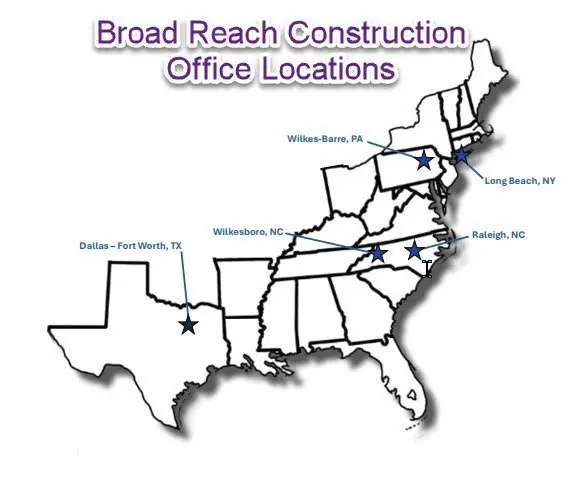
Broad Reach Construction supports commercial development and infrastructure projects throughout Pennsylvania and North Carolina.
Related services include:
- Commercial EV Charging Station Construction
- Design-Build Construction Services
- Commercial Construction Management
- Commercial Development Services
- Warehouse Renovations & Conversions
- Office Fit-Out Construction
- Commercial Facility Improvements

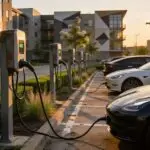
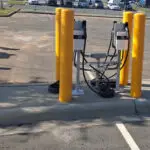
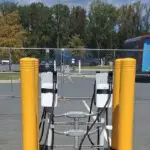

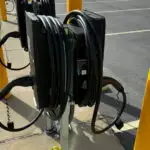

Download the Free Commercial EV Charging Guide
Whether you are evaluating EV charging for a retail center, office complex, industrial facility, apartment community, or commercial development project, this guide provides a practical introduction to the opportunities and considerations involved.
Download your complimentary copy today and learn how commercial EV charging infrastructure can support future growth, customer engagement, employee satisfaction, and long-term property value.
[DOWNLOAD THE FREE GUIDE]
Frequently Asked Questions About Commercial EV Charging Stations
Are commercial EV charging stations profitable?
They can be. Some businesses offer charging as a customer amenity, while others use cost-recovery or revenue-generation models depending on property goals and demand.
What is the difference between Level 2 and DC Fast Charging?
Level 2 chargers are commonly used at offices, retail centers, hotels, and apartment communities. DC Fast Chargers provide significantly faster charging and are often used in high-traffic locations and fleet applications.
Can EV charging stations increase commercial property value?
Many developers and property owners view EV charging infrastructure as a long-term investment that improves property competitiveness and marketability.
Do EV charging stations attract more customers?
EV drivers frequently use charging station apps to locate charging opportunities, making charging infrastructure a potential customer attraction tool.
Are incentives available for commercial EV charging projects?
Federal, state, utility, and local incentive programs may be available depending on project location and eligibility requirements.
How much space is required for commercial EV charging stations?
Space requirements vary depending on charger type, parking layout, accessibility requirements, and future expansion plans.
Can workplace EV charging improve employee retention?
Many employers view workplace charging as a valuable employee benefit that supports recruitment and retention efforts.
How long does commercial EV charging installation take?
Project timelines vary depending on site conditions, permitting requirements, utility coordination, equipment availability, and project scope.
Broad Reach Construction Leadership Team
KEVIN MORGAN
KEVIN DAVID
CHAD LYNCH
SHEA DAVIS
Message from Kevin Morgan, CEO of Broad Reach Construction Management
Broad Reach Construction Management serves clients across the East Coast with a simple mission: deliver dependable, results-driven construction management that brings your vision to life.
With more than 25 years of experience leading complex commercial projects, I’ve built our company around clear communication, disciplined cost control, and reliable execution. Our team is committed to managing every project with care, accountability, and a focus on long-term value.
When you choose Broad Reach, you gain a construction management partner who advocates for your best interests and delivers projects with clarity, control, and confidence.